Why ADHD Brains Set Up the Perfect Money System and Then Abandon It
You spend a whole Saturday head down, hyperfocused, building it, and it’s perfect! The spreadsheet is colour-coded. Every category is accounted for. The formulas are working. You have a tab for weekly totals and a tab for monthly averages and a little chart that updates automatically. It is honestly impressive. You feel like you have finally cracked it, like this is going to be the thing that finally works, after more failed attempts than you want to think about.
Three weeks later, you have not opened it in two and a half weeks.
Sound familiar?
If you’re feeling a little attacked and you’re looking over your shoulder to see if I’ve been watching you, I want you to know two things.
First, this is an extremely common cycle for ADHDers.
Second, the problem is not the spreadsheet. The problem is something more interesting than that. So the solution is also not (only a) spreadsheet.
Why the Setup Feels So Good
The initial burst of energy that goes into building a new money system is very dopamine-fuelled. Novelty activates the ADHD brain in a powerful way. A new system has all the characteristics that make ADHD brains feel engaged: it is a creative project, it has visible progress, there is a clear goal, and it’s going to (finally) solve a big problem. It’s also highly likely that the motivation to hyper-focus on your money was fueled by a financial situation that felt like the $hit hitting the fan, so to speak.
Building the system releases the same dopamine hit as solving the problem, even though the actual problem (the ongoing daily-weekly-monthly practice of using the system) hasn’t actually been solved at all.
This is why so many people with ADHD are excellent at designing financial systems and terrible at maintaining them. The design phase is exciting, and dare I say a little fun? The maintenance phase (aka actually trying to follow the plan) is VERY much not.
Why Perfect Systems Often Fail Faster Than Imperfect Ones
A counterintuitive truth you probably don’t want to hear: the more detailed and beautiful your money system is, the more executive function it takes to maintain it, and the lower the likelihood of it actually sticking.
A system that involves you uploading all your transactions consistently and classifying them in one of your 22 spending categories is doomed to fail even with super fun automated calculations and conditional formatting. Why is it doomed to fail? Let me count the ways.
It hinges on your being consistent (which we struggle with).
It requires you to remember which expenses go where (and the more detail, aka categories, the more difficult this is).
There’s a good chance that the plan you’ve built for your money isn’t sustainable, or even realistic for a short period of time.
No matter how detailed it is, it won’t ever be perfect.
Even if you nail 1 and 2. It’s unlikely that you’ll end up seeing (and feeling) the changes that you hope to see. You can be diligent and do all the tracking and classifying perfectly, and still be exactly where you were when you started.
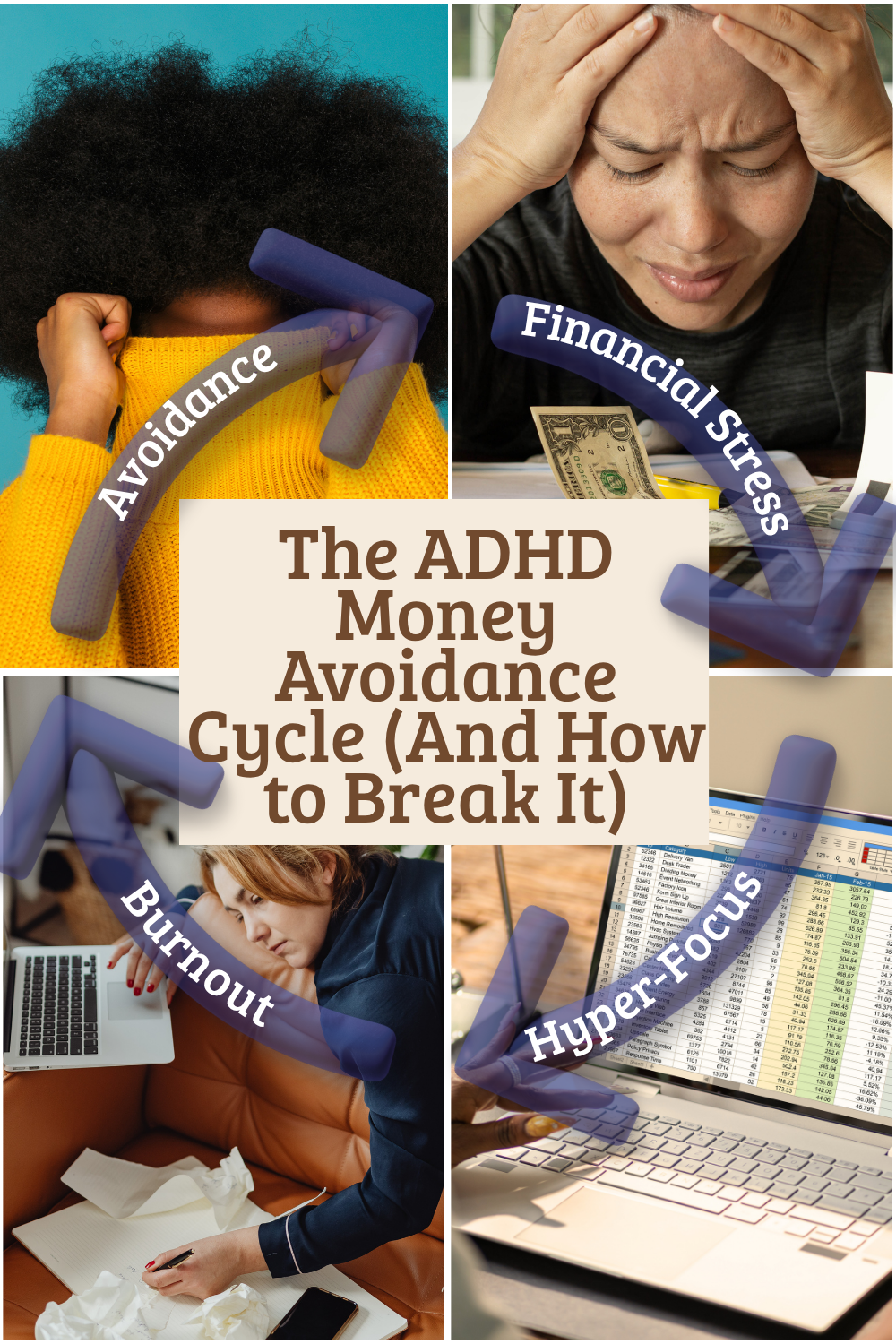
You’ve been here before. New amazing system that is going to solve all your problems. But then the dopamine wears off, and you miss a week. One missed week turns into guilt. Guilt turns into avoidance. Avoidance means the spreadsheet sits unopened. And then starting again feels like too much, so you never open it again. Instead, you wait until you're facing another big financial challenge and start all over again, with a shiny new system.
Is There a Solution to Break the Cycle?
The key is a system that requires less of you, that is partnered with a plan that is based in reality and includes a little room for you to have fun and some dopamine-fueled impulse spending. And unless you LOVE tracking your spending, your system should include as little tracking as possible. WHAT? Yes, a financial coach is suggesting that you have a system for your money that doesn’t involve a lot of tracking! I did, because I hear how often it fails us. Tracking consistently is difficult for folks with ADHD for a lot of reasons, so let's do less of it, shall we?. Learn more about why it’s so hard, and how to make it easier.
What Actually Sticks
The financial systems that hold for ADHD brains share a few things that have nothing to do with how sophisticated they are.
Boring is better
The more invisible and automatic a financial system is, the more likely it is to keep working without you. Automated transfers to savings that happen the day after payday. The less math remembering and worrying you have to do, the better. When you use one account for everything, it is like a hot mess express because there’s so much happening in there. To simplify things, start by separating paying bills from your spending. One account for bills, and a separate account that covers all your other spending. Very little tracking required!
Low barrier to re-entry
Every system will get neglected at some point. The test of how well your system works is what happens to it when life gets busy. If it falls apart, it’s not robust enough, because no matter how good your intentions are right now, there will always be periods where you don’t spend any of your time checking in on your money.
External maintenance
If your system relies entirely on you to remember to use it and manually do 10 things every week, it is dependent on consistent executive function, which ADHD does not reliably provide us (unfortunately). The systems that work best have very few manual tasks, and has some form of external trigger for them: a weekly reminder, a calendar time block, a money check-in with someone else, an automated report that arrives in your inbox. You should not have to remember to do the things, or they are less likely to ever happen.
Progress is more than you think it is
Can progress show up as a higher savings account balance, or a lower credit card balance? Hell yes, and it will when you find what works for you, but it will show up in other ways too. Ways that we often don’t pay attention to because they aren’t how we traditionally think of money progress. Progress also shows up in how you’re feeling, shifts in how you make decisions about spending, and my favourite is when you start spending less time worrying about your money.
Your System Is The Problem.
If you have abandoned more beautiful money systems than you can count, you are not failing at personal finance. You are experiencing the predictable outcome of trying to maintain neurotypical financial systems with an ADHD brain. So let’s stop that cycle, shall we?
The fix is not more discipline. It is a different kind of system. One designed for the brain you actually have, not the one you think you should have.
What to try this week: look at the last system you abandoned. Ask yourself one question: what did that system require you to do that wasn’t realistic for you to actually do? Then check out this blog post to learn more about budgeting with ADHD.
If you want help designing something that your brain can actually sustain, that is exactly what I help my clients do! Come connect with me on Instagram to see if you feel like we’d be a good fit to work together!
About the Author
Sherry is a financial coach with ADHD, who helps entrepreneurs and individuals with ADHD to make positive changes with their money. She is continually surprised by how quickly she can see a shift in how a new client is feeling about their money early on in coaching. Learn more about working with Sherry.