Why ADHD Entrepreneurs Keep Undercharging (And What It's Really Costing You)
Have you ever said (or thought) "I know I should raise my prices. I just can't seem to make myself do it." because if you have, you’re not alone. This is something I hear a lot in discovery calls and client coaching sessions with ADHD entrepreneurs.
I also hear a lot of self-employed folks with ADHD be real a$$holes to themselves about pricing, money, and so many other things in their lives. Things like:
“I know I should raise my prices, but what if all my clients leave?”
"I basically talked myself out of my own rate before the client even asked about it."
“I suck at managing my money now; if I raise my prices, I’ll just have more money to mess up with.”
Sound familiar? These thoughts, and the way they get in the way of taking action, are one of the most common patterns I see among ADHDers with service-based businesses. I spell something out very clearly that you may also be giving yourself a hard time about: This is not a math problem. And it is not a strategy problem. Figuring out what you want your rates to be is actually the easy part. The hard part is all that shit underneath that’s getting in your way.
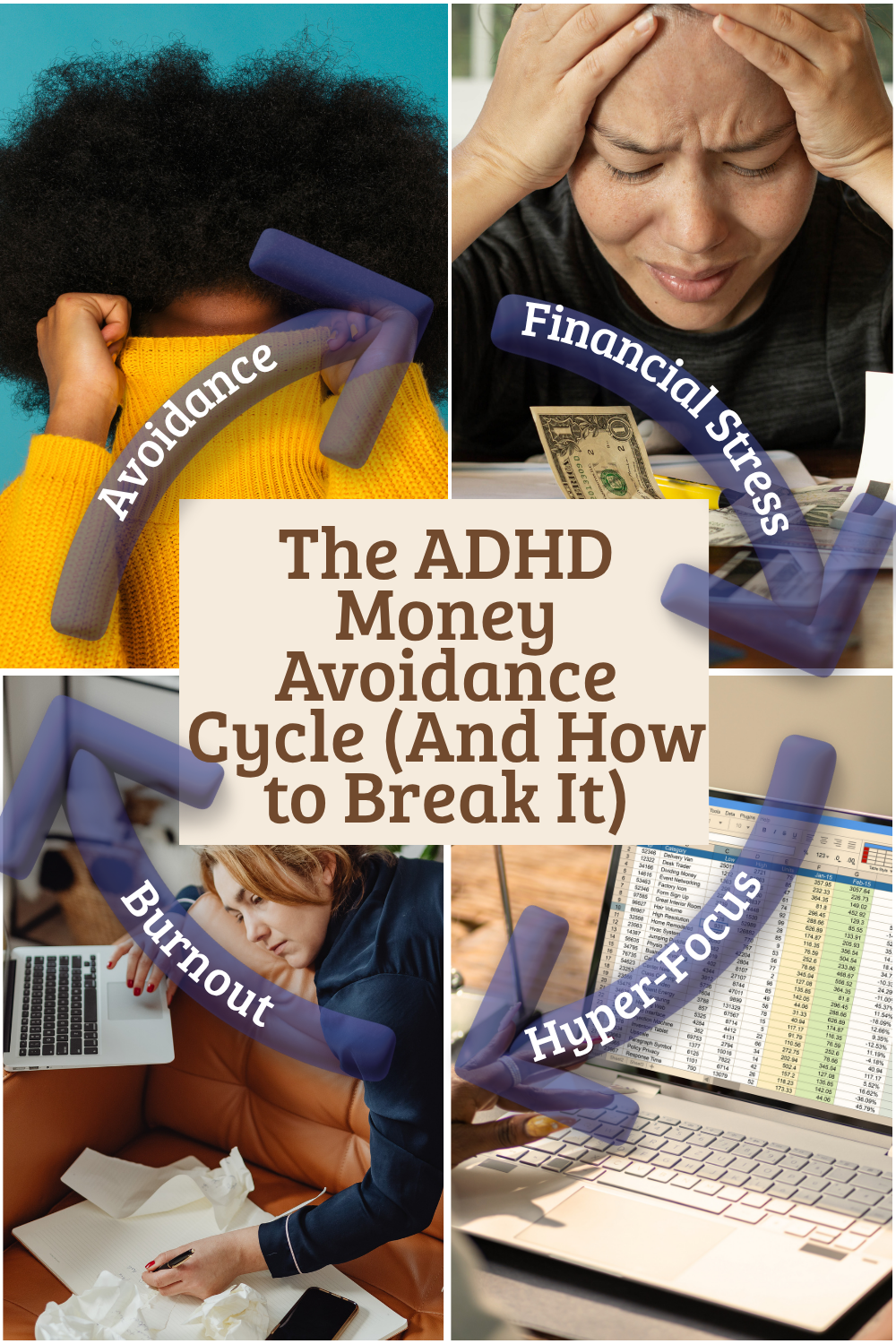
Hard truth: For a lot of ADHD entrepreneurs, undercharging is a money shame problem wearing a pricing hat.
Why Pricing Feels Different When You Have ADHD
Most pricing advice assumes a fairly simple process: figure out your costs, research the market, set a rate that reflects your value, and go. Clean and logical.
Our ADHD brains do not work like that. And it is not because we are being irrational. It is because we are dealing with a few things that neurotypical pricing advice does not account for.
🫣 Like the shame backlog
If you have spent years watching money disappear, missing tax deadlines, forgetting to invoice, or running your business and your personal finances through the same account, and generally being a hot money mess (no judgement, just keeping it real), you are probably carrying a lot of financial shame. Like giant bags of shame because, again, we can be giant a$$holes to ourselves! And shame has a way of convincing you that you do not deserve to be paid well.
This is not a logical belief. But it is an extremely common one, especially for ADHD entrepreneurs who have internalized the idea that they are "bad with money." If part of your brain believes you cannot manage money responsibly, why would it feel okay to ask for a lot of it?
🔁 The approval loop
Rejection sensitivity is a real thing for a lot of ADHD brains, and it plays out in pricing in a sneaky way. Before the conversation even happens, the ADHD brain is already anticipating the no. Already imagining the awkward pause after you say your rate. Already calculating how much easier it would be to just charge a little less so they definitely say yes.
So you discount pre-emptively. You volunteer a lower rate before anyone asks. You add extras to justify the number. And then you wonder why you feel resentful after the project is done. We dive into this in a recent podcast episode where we talk pricing and salary negotiations.
👎🏻 The "I'm not that good" loop
Executive function challenges affect consistency. And inconsistency can feel like incompetence, even when it absolutely is not. If your ADHD has ever caused you to miss a deadline, forget a follow-up, or go radio silent on a client during a bad week, it is really easy to convince yourself that you do not quite deserve to charge what someone without ADHD would charge.
That belief is wrong. But it feels very real. And as much as I wish I could turn it off for you, I can’t. To shift these thoughts takes a lot of work (but you are worth it)!
💸 What Undercharging Is Actually Costing You
This is the part people often underestimate, but that’s not how I roll, so let’s look at the true cost of undercharging.
Yes, undercharging impacts your bank account, but by how much? Until you say f*ck it and raise your rates, you won’t know the full financial impact. But think about how much you would like to raise your rates by, and then spend a few minutes calculating how much your income would increase by if nothing else changes in your business (yes, I know things will likely change, but understanding this # is where we start). How could that increase in your income change things in your business, or on the personal side of things?
But you know it’s more than the money! Undercharging also affects your energy, how you feel about your business and your clients (undercharging can often lead to resentment), how you actually show up in your business, and whether you are creating a business that is sustainable or leading you down the road to burnout!
When my clients are underpaid for their work, they have often taken on more clients to increase their income. More clients means less capacity. Less capacity means more mistakes, more missed things, more of the ADHD symptoms that make running a business and living your life hard in the first place. And then comes more shame because you ‘should just be able to…..’
You also end up in a position where the clients who drain you the most are the ones you feel least able to say no to, because you need the money. These are often the clients who don’t see your value and have unrealistic expectations. You know the ones that message you at 11PM on Saturday night, and then again early Monday morning because they are pissed that you haven’t responded yet. That is a rough place to be. It compounds all of the challenges we have with running a business with ADHD.
The math version of this is simple. If you raise your rate by 20%, you can work with 20% fewer clients for the same revenue. With ADHD, that margin can create breathing room, and room to say no to leads that are waving giant red flags. That is the space where you can actually do your best work.
🏁 Where to Start
None of this is fixed by someone telling you to "just charge more." You already know that. The shift has to be internal before it becomes practical.
✅ A few things that actually help:
Separate the money story you’re telling yourself from the pricing decision. Your rate is not a reflection of your worth as a person, your reliability as a human being, or whether you deserve good things. It is the market value of a specific service. Those are different conversations.
Notice when you pre-discount. The next time you are about to lower a rate before anyone asks, pause. Ask yourself whose voice that is. It is almost never the client's. I’m not saying it’s wrong to give discounts if you choose to, but I am saying that it’s not up to you to decide what a potential client can afford, or is willing to pay.
Start with one rate increase. Not a full overhaul. Just one service, one increment. See what happens. Most ADHD entrepreneurs discover that clients say yes much more often than the brain predicted they would.
Get the facts when it comes to your numbers. Understanding what you need to pay yourself is an important piece of the puzzle. And an area that my new clients don’t often have clarity with. That’s why it’s part of the early foundation we build together for their money. But I also have a free resource you can use to help you understand what that number looks like for you.
Get the financial shame piece out of the pricing conversation. Because if the shame is running the show, no pricing strategy in the world is going to hold. To begin exploring this, try to carve out some quiet time by yourself with a journal. Here are a few questions to ask yourself:
What thoughts pop into my head when I think about increasing my prices?
Do I have any proof that what I’m worried about could actually happen if I raise my rates?
👋 If the thought of digging into your numbers, developing a strategy to raise your prices, and maybe even redesigning your services are things you WANT to do, but you feel stuck, let’s chat. I love helping my financial coaching clients to see the big picture with their money, and use that to help shape the decisions they make in their businesses. And vibe is important to me because I have had lessons where I said yes to folks who my gut told me I shouldn’t, so before anything else, we hop on a Zoom call to get to know each other.
About the Author
Sherry Andrew is a financial coach who works specifically with entrepreneurs and individuals with ADHD. She has ADHD herself and has had every version of the pricing conversation, including the one where you drop your rate mid-sentence before the client says a word 😶🌫️. She helps ADHD business owners untangle money shame from money decisions so they can build something that actually pays them what they deserve. If that sounds like the conversation you need, she would love to have it with you.